
Advanced SMR Technology
The Future of Nuclear Energy
Small Modular Nuclear Reactors in Disaster-Resistant Ellipsoid Domes
Combining proven boiling water reactor technology with revolutionary protective architecture for unmatched safety, efficiency, and resilience.

Scale of Impact
While electric vehicles help reduce emissions, nuclear energy operates at a completely different magnitude
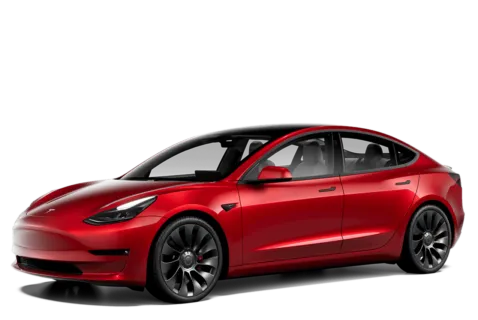
Single Tesla Vehicle
Electric Vehicle
CO₂ avoided over 17-year lifespan
~3 tons per year

Single CES Module
300 MW SMR
CO₂ avoided in first year alone
33333x more impact than Tesla's lifetime in just 1 year
The Bottom Line
A single 300 MW CES module prevents more CO₂ emissions in one year than 33,333 Tesla vehicles do over their entire 17-year lifespans.
That's the equivalent impact of replacing every car in a medium-sized city with an electric vehicle—achieved by a single nuclear module.
Resilient Architecture
Ellipsoid Dome Protection System
Engineered for Extreme Resilience
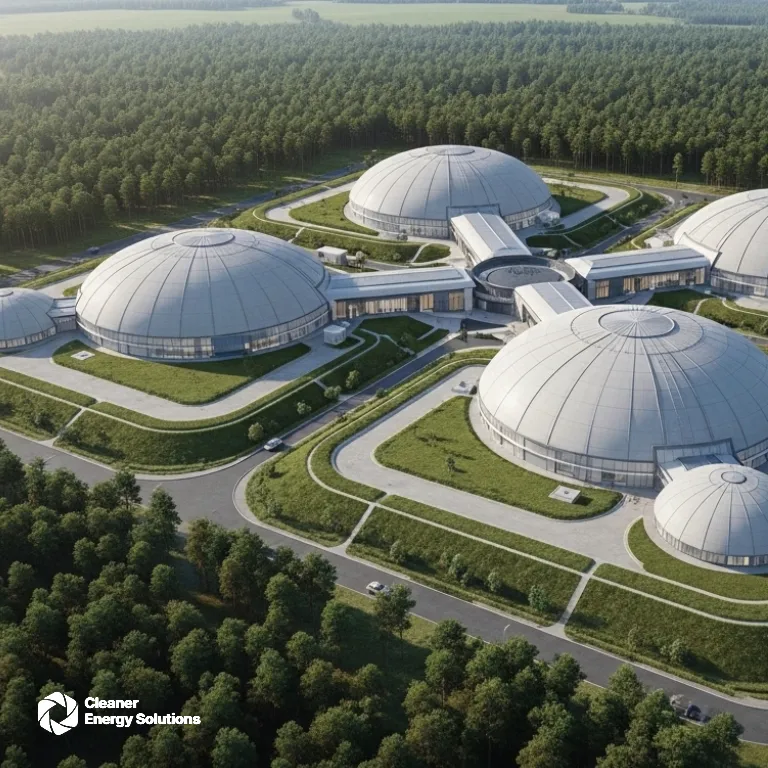
Our ellipsoid dome design draws from decades of proven monolithic concrete construction, adapted specifically for nuclear facilities. Each dome features:
- ✓ Aerodynamic shape reduces wind loads by 40% vs. traditional structures
- ✓ Rebar mesh + steel plate composite for extreme durability
- ✓ Underground foundations anchored 30+ feet into bedrock
- ✓ Tested to withstand direct aircraft impact
Monolithic Concrete Construction
Seamless reinforced concrete shells with no weak joints—engineered to withstand extreme forces.
Hurricane & Earthquake Resistant
Category 5 hurricane winds (200+ mph), seismic events up to 9.0 magnitude, and storm surge protection.
Passive Cooling
Natural convection and thermal mass provide backup cooling without power or human intervention.
Proven Reactor Technology
Small Modular Reactor Technology
The World's Safest Reactor Design
The GE Hitachi and Westinghouse Small Modular Reactors represent the culmination of nuclear engineering evolution. Key innovations include:
Safety Features
- • Passive Emergency Core Cooling
- • Automatic Depressurization
- • Containment Isolation
- • Natural Circulation Cooling
Operational Benefits
- • 24-month refueling cycle
- • 95%+ capacity factor
- • Minimal maintenance downtime
- • Load-following capability
Passive Safety Systems
Gravity-driven cooling, isolation condensers, and natural circulation eliminate need for active systems.
Generation III+ Design
NRC design certification, enhanced safety features, and simplified operations.
Compact Footprint
300 MW output in a fraction of the space—ideal for distributed generation and modular expansion.
60+ Years of Experience
Based on proven boiling water reactor lineage with hundreds of reactor-years of operational data.
Flexible Deployment
Modular Scalability at Its Finest
Add capacity incrementally as demand grows—no massive upfront investment
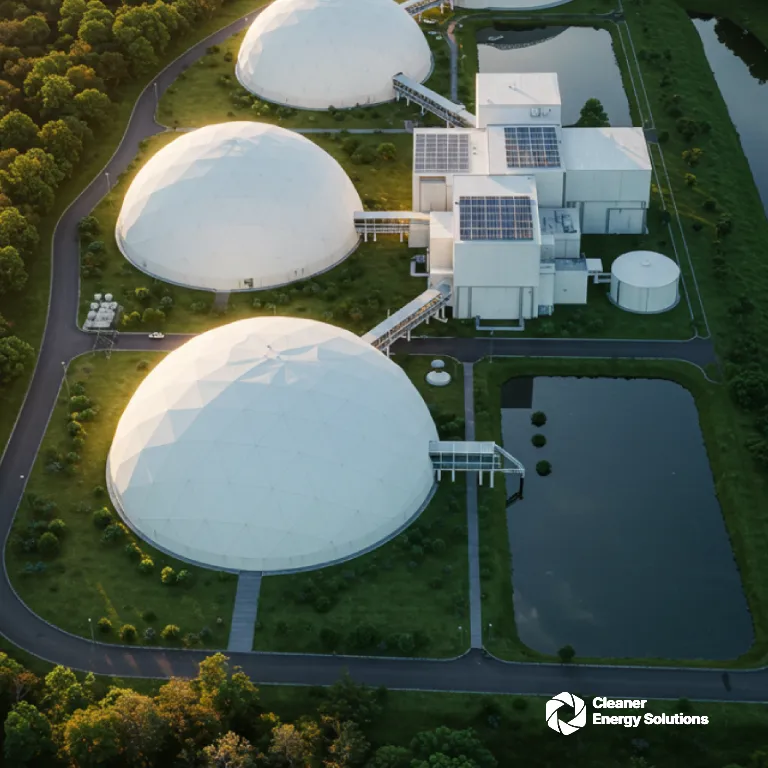
Single Module Start
Begin with one 300 MW unit. Lower initial capital, faster deployment, immediate revenue generation.
Triple Module Expansion
Expand to 900 MW with three synchronized units. Shared infrastructure reduces costs by 25%.
Full 6-Module Complex
Ultimate configuration: 1.8 GW from six units. Equivalent to a traditional large nuclear plant, at one tenth the footprint.
Factory-Built Modules
Prefabricated components reduce construction time by 50% and ensure consistent quality.
Rolling Deployment
Stagger installations to maintain continuous construction workforce and cash flow.
Grid Integration
Each module connects independently—redundancy ensures reliability even during maintenance.
Technical Specifications
Minimal Environmental Footprint
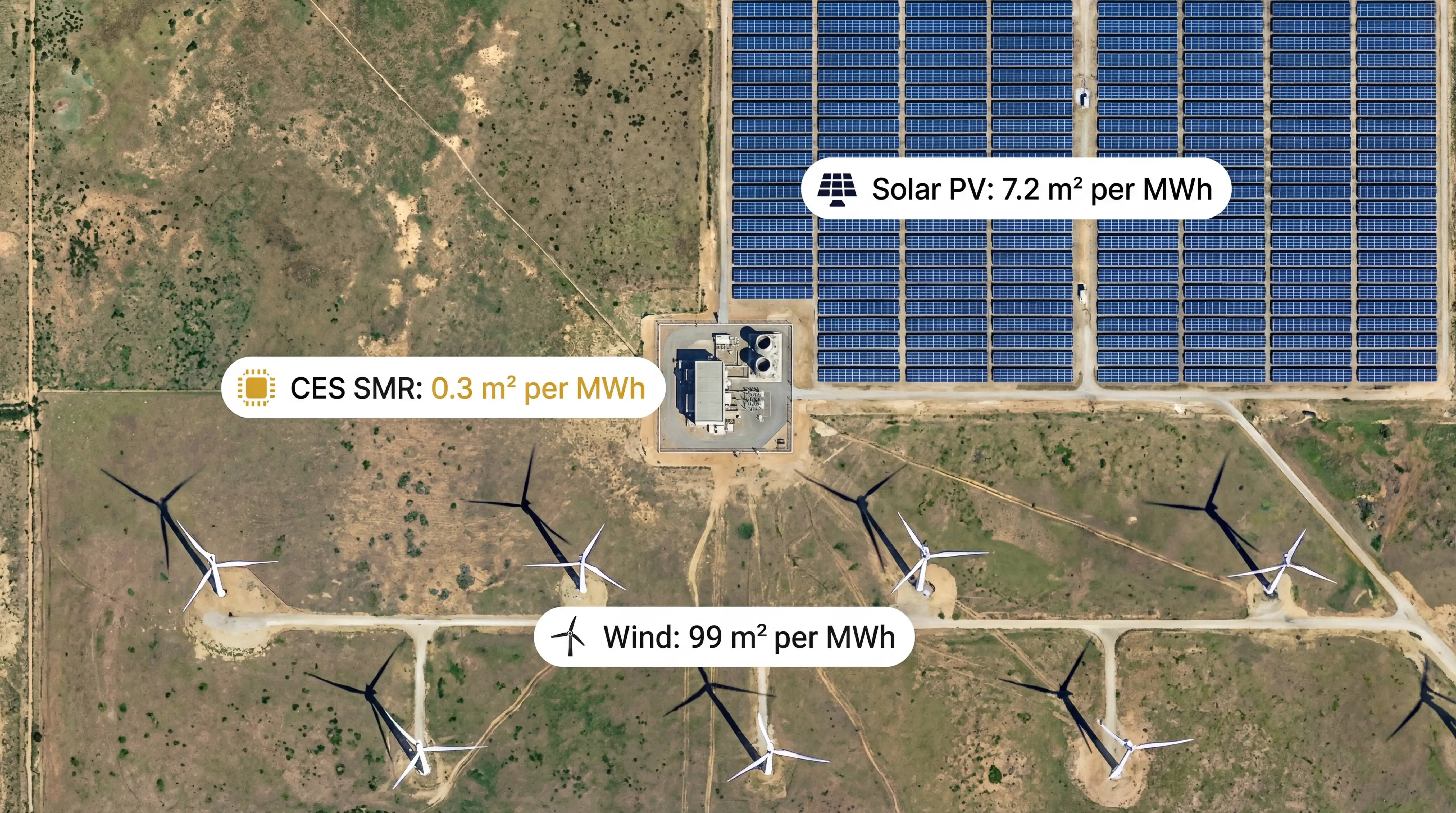
CES SMR technology uses dramatically less land per megawatt than any other energy source
SMR Technology
0.00175
acres / MW
300x more efficient than solar
Solar Farms
0.5-1.0
acres / MW
Requires vast land areas
Traditional Nuclear
0.012
acres / MW
8x smaller footprint than traditional Nuclear
Visual Gallery
Technology Visualizations
Explore detailed renderings and technical diagrams
High-resolution architectural visualizations of complete installations
Detailed reactor system diagrams and safety feature illustrations
Conceptual designs for powering next-generation computing facilities
Ready to Learn More?
Discover how CES technology can power your future energy needs