
Lawmakers Demand Tech Giants Pay Their Own Power Bills: The End of the "Ratepayer Subsidy" for AI
By Cleaner Energy Solutions Staff
Published February 8, 2026
The honeymoon phase between Big Tech’s AI ambitions and the American power grid is officially over. As 2026 unfolds, a growing chorus of state and federal lawmakers is sending a clear message to the world’s wealthiest corporations: If you want the power for AI, you have to pay the tab yourself.
For years, the rapid expansion of massive data centers was welcomed as a sign of economic progress. But as the physical reality of these “energy gluttons” sets in, the bill is coming due—and it’s arriving in the mailboxes of ordinary American families. Recent legislative hearings in Michigan and Washington have pulled back the curtain on a brewing crisis where residential consumers are inadvertently subsidizing the infrastructure of the trillion-dollar AI industry.
The Boiling Point: Hearings in Michigan and D.C.
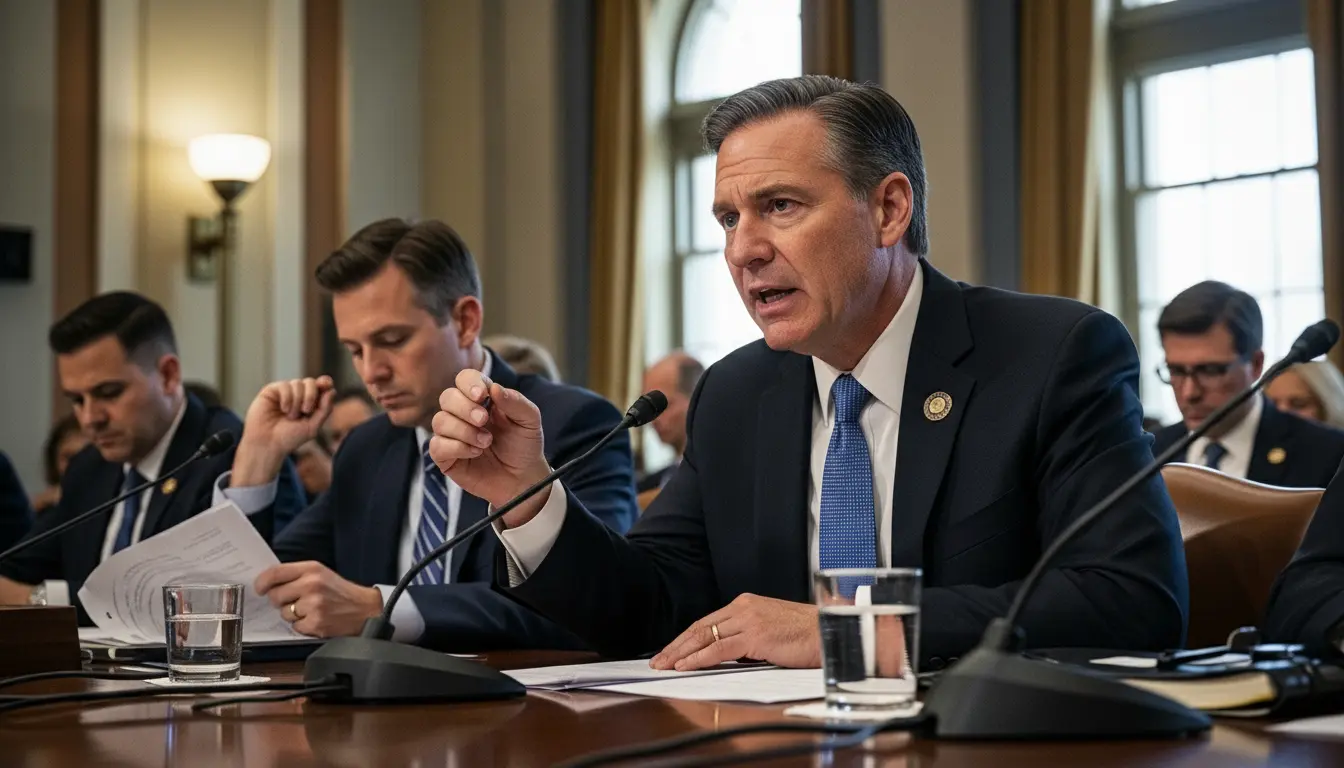
On February 4, 2026, the tension reached a fever pitch during high-stakes hearings held simultaneously at the federal and state levels.
In Washington D.C., the House Energy and Commerce Committee grilled federal regulators on the Trump administration’s push to fast-track data center development. FERC Chair Laura Swett emphasized a commitment to ensuring that consumers pay only “just and reasonable rates,” a standard that is increasingly difficult to meet as massive load connections strain existing resources.
In Lansing, Michigan, the House Subcommittee on Oversight heard sobering testimony regarding the local impact of these facilities. Experts like Ben Green from the University of Michigan noted that the “incredible amounts of electricity” required by data centers are pushing regional grids to their breaking points.
The legislative push is being spearheaded by the Power for the People Act, introduced by Senator Chris Van Hollen. This legislation seeks to create separate rate classes for large energy consumers and mandates that data centers pay for the grid upgrades they necessitate. As Van Hollen pointed out, “The richest corporations on the planet are constructing new data centers at working families’ expense”.
The $70 Per Month “AI Tax”
The numbers behind this outcry are staggering. A Bloomberg News analysis revealed that wholesale electricity costs have surged by as much as 267% over the last five years in areas adjacent to data center hubs.
Nowhere is this more apparent than in the PJM Interconnection region, which serves 67 million people across 13 states. According to reports:
- Data center demand accounted for $9.3 billion in additional capacity costs passed to ratepayers in a single 12-month period starting in mid-2024.
- The Natural Resources Defense Council (NRDC) projects that by 2028, the average household in this region could see their monthly energy bills increase by $70 solely due to data center growth.
- While data centers currently consume roughly 4% of U.S. electricity, federal projections suggest that number could skyrocket to 12% by 2028.
The irony is not lost on consumers: while AI is promised to make life more efficient, it is currently making life more expensive for the very people it is supposed to serve.
Voluntary Pledges vs. Regulatory Teeth
Under increasing scrutiny from a Senate investigation, tech giants like Microsoft, Google, Amazon, and Meta have begun issuing voluntary pledges to cover their energy expenses. Microsoft, for instance, recently committed to paying for both its consumption and the necessary grid upgrades to shield residential customers.
However, lawmakers remain skeptical. Without formal regulatory mechanisms or enforcement, these “commitments” are little more than PR statements. Energy Secretary Chris Wright has argued that this growth will eventually spur enough new power generation to lower prices for everyone, but state utility regulators are not waiting for that “trickle-down” energy effect. They are demanding immediate protections for existing ratepayers as the administration moves to expedite AI infrastructure.
The Path to Energy Independence: Paying the Way
The solution to this gridlock isn’t to stop the AI boom, but to change how it is powered. The industry is moving toward a “Bring Your Own Power” model—where data centers operate as self-sustaining islands rather than drains on the public pool.
Cleaner Energy Solutions (CES) provides the perfect vehicle for this shift. Our compact, resilient Small Modular Reactors (SMRs), housed in signature ellipsoid domes, are designed to deliver up to 300 MW of zero-carbon power per module directly onsite. By utilizing this “Dell-style” modular ecosystem, hyperscalers can fulfill their pledges to cover 100% of their energy costs without relying on new natural gas plants or grid upgrades that inevitably trickle down to household bills. Aligned with the Nuclear Energy Innovation and Modernization Act and the current administration’s focus on domestic energy independence, CES allows Big Tech to scale its ambitions while ensuring the American ratepayer is never left “picking up the tab.”
A Greener, More Equitable Future
As Congress and state legislatures continue to tighten the screws on data center operators, the transition to onsite, carbon-zero generation is no longer just a “green choice”—it is a regulatory necessity. The AI revolution should not be funded by the monthly budgets of working families. By embracing modular nuclear solutions, we can keep the lights of innovation on without turning the lights out on the American consumer.