
DOE's $800M Investment in SMRs - A Game-Changer for CES's Modular Nuclear Vision
By Cleaner Energy Solutions Staff
Published December 3, 2025
In a landmark move that accelerates the shift toward carbon-zero energy independence, the U.S. Department of Energy (DOE) has awarded up to $800 million to advance the deployment of Small Modular Reactors (SMRs). This funding, announced on Tuesday, splits evenly between the Tennessee Valley Authority (TVA) and Holtec Government Services, supporting innovative projects in Tennessee and Michigan. For Cleaner Energy Solutions (CES), this federal boost aligns seamlessly with our mission to deploy resilient, scalable SMR technology in ellipsoid domes, delivering reliable power to meet surging demands from AI data centers, grids, and communities---while echoing the Trump administration’s pro-nuclear agenda.
The DOE’s investment comes at a critical juncture as U.S. electricity demand surges for the first time in two decades, projected to rise by 12% by 2028 due to AI and data center growth. Energy Secretary Chris Wright emphasized the need for “reliable, round-the-clock power” to fuel manufacturing and grid security. TVA will receive $400 million to deploy GE Vernova Hitachi’s SMR at the Clinch River Nuclear Site in Tennessee---the first of its kind in the U.S., with operations potentially starting in the early 2030s. Meanwhile, Holtec’s $400 million will fund two SMR-300 reactors at Michigan’s Palisades site, adding 600 MW of capacity and creating hundreds of jobs.
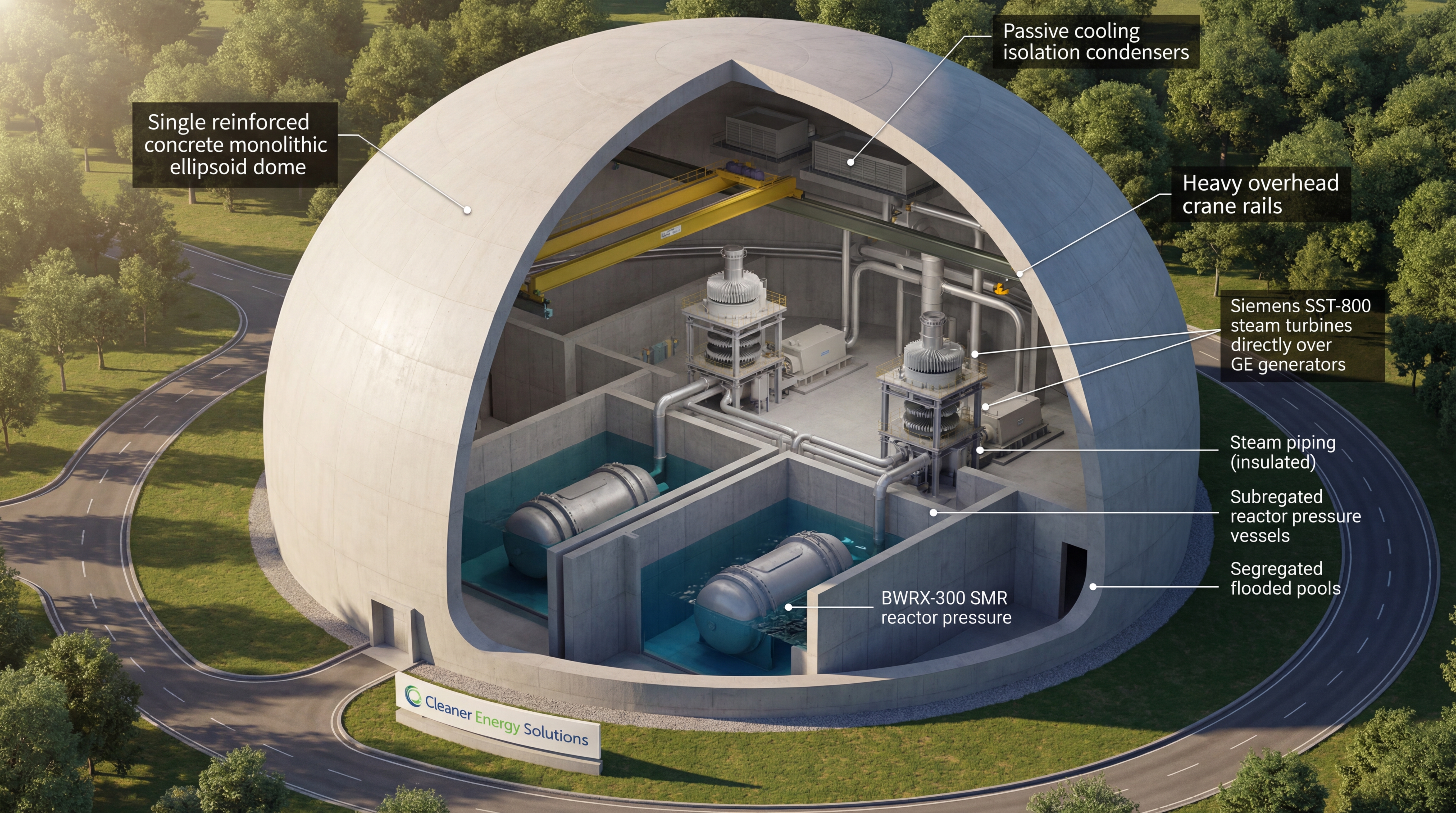
This announcement resonates deeply with CES’s innovative SMR designs, which feature advanced reactor modules within sleek, hurricane- and earthquake-resistant ellipsoid domes. Each CES module produces up to 300 MW with a minimal footprint, mirroring the efficiency and scalability of the funded projects. Our proposed facilities in Puerto Rico---such as San Germán, Arecibo, and Morovis---could leverage similar advancements to transform the island’s diesel- and natural gas-dependent 1,800 MW grid into a modular, carbon-free ecosystem. Inspired by Elon Musk’s principles of optimization, CES envisions a “Dell computer”-style energy model: start with one dome and add more for 600 MW, 900 MW, or beyond, powering everything from local communities to high-demand AI infrastructure.
Under the renewed Trump administration focus on nuclear energy, this funding supports key policies like the Nuclear Energy Innovation and Modernization Act, which streamlines regulations and funding for SMRs. CES’s designs, with 2—3 feet of reinforced concrete segregating reactors, steam turbines, and generators, prioritize safety and resilience---essential for regions prone to natural disasters like Puerto Rico. As critics note potential challenges in SMR economics and waste management, CES addresses these through factory-built modularity, reducing construction risks and aligning with DOE’s efforts to overcome design, licensing, and supply chain barriers with the remaining $100 million from the solicitation.
Looking ahead, CES is exploring partnerships with leaders like AWS, Tesla, and LUMA to integrate SMRs with data centers and grids. Advanced visualizations, including D3 chart maps, will showcase the environmental and economic impacts of our facilities, ensuring compliance with nuclear standards while advancing global sustainability goals.
This DOE initiative not only validates the promise of SMRs but propels CES toward realizing a future where clean, modular nuclear power drives America’s energy independence. Stay tuned to cleanerenergy.solutions for updates on our Puerto Rico projects and how we’re revolutionizing energy one dome at a time.